Proof Not Promises - Learning Commons' K-12 Knowledge Graph Is Rewriting EdTech Procurement

District leaders and edtech buyers are entering a new phase of AI adoption: the conversation is shifting from “Can this tool generate content?” to “Can this tool prove instructional quality, alignment, and outcomes?” The September 22, 2026 launch of the Learning Commons platform is important because it operationalizes that shift with shared infrastructure - not just model features - and gives procurement teams a concrete way to ask harder questions.
For vendors, this is not a branding moment. It is an architecture moment. The teams that can plug into shared standards, progression logic, misconception data, and transparent evaluators will be better positioned for district RFPs that increasingly require evidence, auditability, and educational validity.
Why shared AI infrastructure changes procurement logic
For years, many edtech products rebuilt core educational context internally - standards mappings, learning sequences, and quality checks - often with inconsistent depth. Learning Commons proposes a different model: public, machine-readable educational infrastructure that multiple vendors can use.
Key implications for buyers and vendors:
Reduced duplication: shared datasets lower the cost of rebuilding the same educational scaffolding.
Greater comparability: tools can be tested against common evaluators and rubrics.
Faster due diligence: districts can inspect alignment and quality claims with more transparency.
More consistent governance: open and gated data access models make licensing and data provenance more explicit.
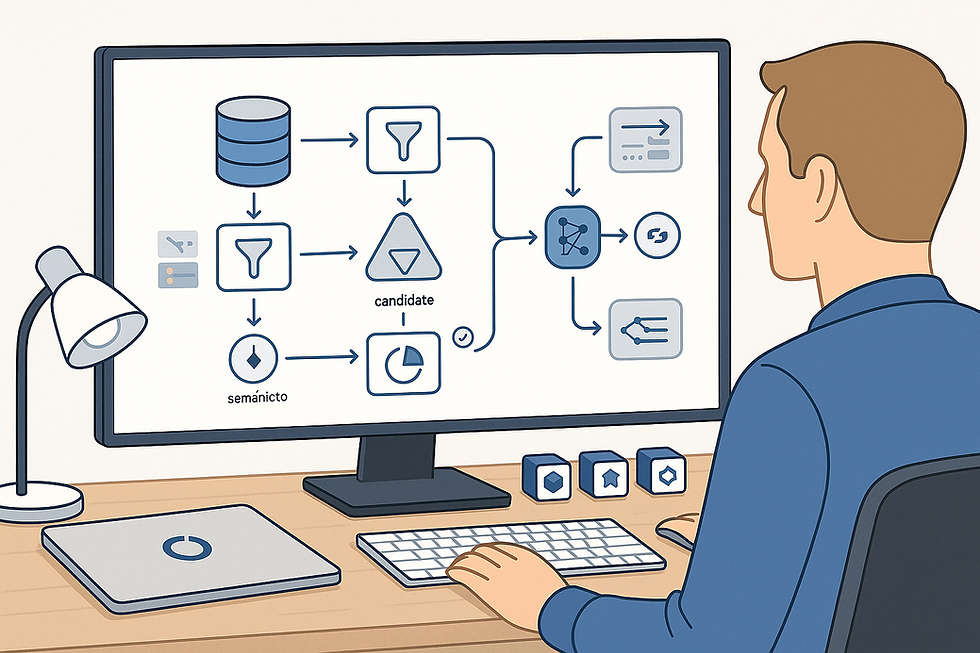
The platform combines three layers that matter in purchasing decisions:
Knowledge Graph for structured K-12 context (standards, components, progressions, curriculum, misconceptions, durable skills).
Evaluators to test specific quality dimensions such as grade-level appropriateness, standards alignment, and feedback quality.
Agent Skills to encode instructional workflows for teacher-facing tasks.
This structure aligns closely with what procurement teams increasingly want: evidence that AI outputs are instructionally grounded before they reach classrooms.
From “standards-aligned” to curriculum-cognitive systems
A major practical insight from the curriculum alignment use case is that standards alignment alone is insufficient. A resource can technically match a standard and still be unusable if it ignores lesson sequence, vocabulary, or representation choices already established in the local curriculum.
What this means operationally:
AI content should be generated relative to a specific lesson position, not only a broad standard.
Systems should check whether generated tasks assume concepts students have not yet been taught.
Multi-curriculum support should be built as a parameterized data layer, not custom logic per district deployment.
For CTOs and product leaders, this pushes architecture toward curriculum-aware retrieval and generation pipelines. For district evaluators, it raises the bar from “Is this aligned?” to “Is this aligned to what we taught last week and what we teach next?”
Misconceptions as infrastructure, not feature garnish
The integration of Eedi’s Misconception Graph introduces a second major shift: moving from correctness checking to diagnostic reasoning.
Instead of only identifying wrong answers, misconception-linked systems can support:
Targeted intervention selection based on likely conceptual blockers.
More precise feedback loops in adaptive practice.
Better remediation pathways tied to known error patterns.
The public artifact is substantial: Eedi’s release includes a large misconception-construct map with explicit graph structure and licensing for reuse. This matters because it converts “we personalize learning” from a generic claim into something testable and inspectable.
In procurement terms, misconception infrastructure can become a differentiator in categories like tutoring, formative assessment, and intervention support - especially where outcomes-based contracts require clearer causal narratives for improvement.
Evaluation is becoming a first-class procurement requirement
Parallel market signals reinforce this direction. The K-12 AI Infrastructure Program’s 2026 benchmarks RFP explicitly calls for open datasets, evaluators, and benchmark workflows tied to pedagogically meaningful tasks - not just general model performance.
This points to an emerging norm: districts and funders will expect vendors to show:
Construct-level quality evidence, not single composite scores.
Human-expert-grounded evaluation methods.
Clear benchmark and data lineage with contamination and governance controls.
Performance claims linked to specific educational use cases (planning, feedback, coaching, adaptation).
The broader research context supports this caution. Stanford SCALE’s 2026 review found that despite hundreds of AI-related papers, only a small subset offered strong causal evidence, and high-quality U.S. K-12 causal evidence remains limited. Translation: shared infrastructure is necessary, but not sufficient. Vendors still need rigorous validation strategies and realistic impact claims.
What vendors should do now before RFP language catches up
Teams do not need to wait for procurement templates to change. They can prepare now.
Product and data architecture
Integrate structured educational context (standards, components, progressions, misconceptions) into core generation and feedback loops.
Support multiple access modes (download/API/MCP) to fit district and partner IT constraints.
Track dataset versioning and license metadata as part of production governance.
Evaluation operations
Implement dimension-specific evaluation pipelines rather than one global “quality score.”
Pair automated evaluators with periodic expert-human calibration.
Publish internal evidence cards describing what is measured, how, and with which limitations.
Go-to-market and procurement readiness
Rewrite claims around verifiable instructional outcomes.
Prepare buyer-facing artifacts that map product behavior to standards, progression logic, and misconception handling.
Anticipate RFP clauses requesting benchmark evidence, evaluator methodology, and curriculum-coherence demonstrations.
The near-term winners in K-12 AI will likely be the vendors who can combine speed with proof: fast iteration, but on top of shared educational infrastructure and transparent evaluation practices. As procurement shifts from AI novelty to instructional accountability, that combination will move from competitive advantage to baseline expectation.
Sources
Learning Commons announces platform to scale proven teaching and learning practices
knowledge-graph README (learning-commons-org/knowledge-graph)
Eedi’s Misconception Graph is now available as an open-source public good through Learning Commons
Teaching & Learning (T&L) Benchmarks and Datasets Request for Proposals